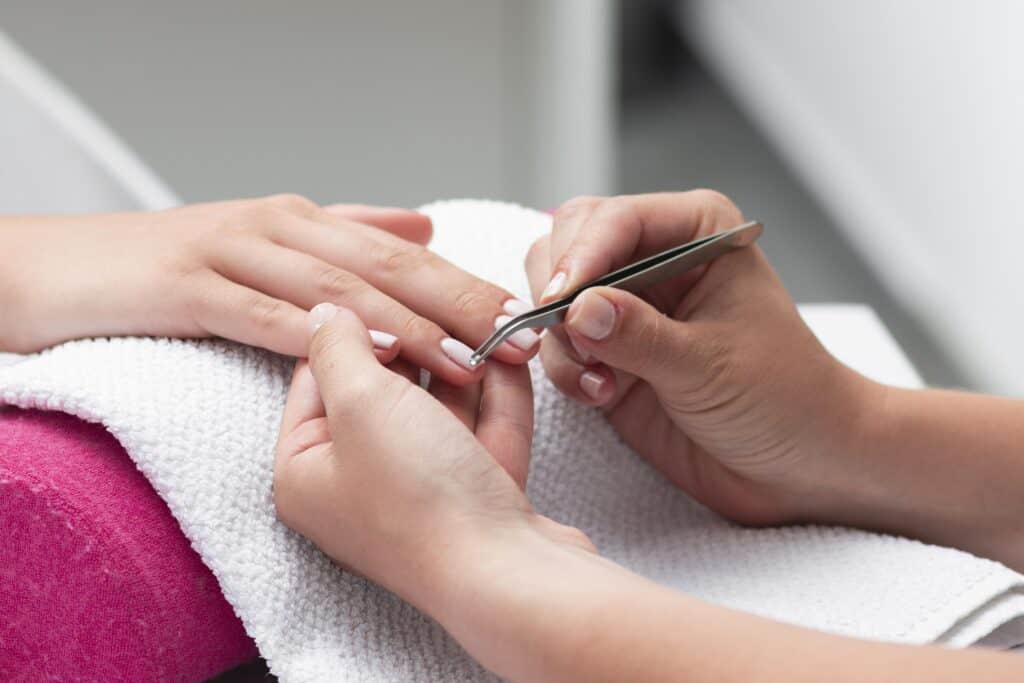
Nail Care Coimbatore By NICK JOHNSON Good […]


Have you noticed dark spots, uneven skin tone, or patches of darker skin appearing on your face? These changes are commonly known as skin pigmentation.
Skin pigmentation is a common concern that can affect people of different ages and skin types. It may appear on the forehead, cheeks, upper lip, chin, neck, and other parts of the body.
Understanding what causes pigmentation and how to care for your skin can help you maintain a more even, healthy-looking complexion.
Let’s explore the different types of pigmentation, their causes, and simple ways to care for your skin.
Skin pigmentation refers to the colour of your skin, which is mainly determined by a natural pigment called melanin.
Melanin is produced by cells called melanocytes. When melanin production or distribution becomes uneven, darker patches or spots may develop on the skin.
This condition is commonly referred to as hyperpigmentation.
Sun spots are flat, brown or dark marks that commonly develop on areas frequently exposed to sunlight, such as the face, hands, and shoulders.
Long-term UV exposure is a major contributing factor.
Melasma appears as brown or grey-brown patches, usually on the cheeks, forehead, nose, and upper lip.
It is often associated with hormonal changes, pregnancy, and sun exposure.
These are dark marks that remain after skin inflammation or injury.
Common triggers include:
Acne and pimples
Skin irritation
Insect bites
Scratching or picking the skin
Certain cosmetic procedures
Freckles are small, flat brown spots that are influenced by genetics and sun exposure.
They often become more noticeable after spending time outdoors.
UV radiation can stimulate melanin production, leading to dark spots and uneven skin tone.
Hormonal fluctuations can contribute to pigmentation, particularly melasma.
After acne or irritation heals, dark marks may remain due to increased melanin production.
Some people are naturally more prone to freckles and certain pigmentation patterns.
Harsh skincare products, aggressive exfoliation, and unsuitable treatments can irritate the skin and contribute to dark marks.
The right skincare habits can help prevent pigmentation from becoming more noticeable and improve overall skin appearance.
Sun protection is one of the most important steps in pigmentation care.
Choose broad-spectrum SPF 30 or higher.
Apply sunscreen every morning.
Reapply approximately every two hours when outdoors.
Wear protective clothing and seek shade when possible.
Use a mild cleanser suitable for your skin type.
Avoid aggressive scrubbing, as it may worsen irritation and pigmentation.
A suitable moisturizer helps support the skin barrier and maintain hydration.
Choose products according to your skin type.
Certain ingredients may help improve the appearance of uneven skin tone:
Vitamin C: An antioxidant that can help improve the appearance of dark spots.
Niacinamide: Helps support the skin barrier and improve uneven-looking skin tone.
Azelaic Acid: May help with acne-related pigmentation and uneven skin tone.
Retinoids: Can help improve skin texture and pigmentation, but may cause irritation and require professional guidance.
Alpha Arbutin: An ingredient used in some products targeting dark spots.
Introduce active ingredients gradually and avoid combining multiple strong products without guidance.
If you are dealing with pigmentation, avoid these common skincare mistakes:
Skipping sunscreen.
Using harsh scrubs on dark patches.
Picking or squeezing pimples.
Trying too many skincare products at once.
Using unverified skin-lightening creams.
Ignoring skin irritation.
Expecting pigmentation to disappear overnight.
Remember, pigmentation often takes time to improve. Consistency and appropriate skin care are important.
Professional facial treatments can help cleanse, hydrate, and improve the overall appearance of your skin.
Depending on your skin type and concerns, suitable cosmetic services may include:
Deep cleansing facial
Hydrating facial
Brightening facial
Professional skin care consultation
However, salon facials cannot guarantee removal of pigmentation or treat every underlying skin condition.
For persistent, changing, or unexplained pigmentation, consult a qualified dermatologist before choosing a treatment.
Not all dark spots are the same.
Seek professional medical advice if you notice:
Sudden changes in skin colour.
A dark spot that changes in size, shape, or colour.
Persistent or spreading pigmentation.
Pigmentation accompanied by itching, bleeding, or irritation.
Dark patches that do not improve with basic skincare.
A dermatologist can identify the cause and recommend suitable treatment.
Cleanse with a gentle face wash.
Apply a suitable Vitamin C or niacinamide product if tolerated.
Use a lightweight moisturizer.
Apply broad-spectrum SPF 30 or higher sunscreen.
Remove makeup and sunscreen.
Cleanse your face gently.
Apply a suitable pigmentation-care product.
Finish with moisturizer.
Follow a consistent routine and give your skin time to respond.
Healthy-looking skin starts with understanding your skin concerns and choosing suitable care.
At Beaueteck Family Salon, R.S. Puram, Coimbatore, we offer professional facial and beauty services to help you maintain refreshed, hydrated, and healthy-looking skin.
Whether you are looking for a refreshing facial, deep cleansing, or a professional beauty consultation, our team can help you explore suitable services.
Understand your skin. Choose the right care. Let your natural beauty shine!
Take some time for yourself—because self-care matters.
 Beaueteck Family Salon
R.S. Puram, Coimbatore
9894934369
 Website: www.beaueteck.com